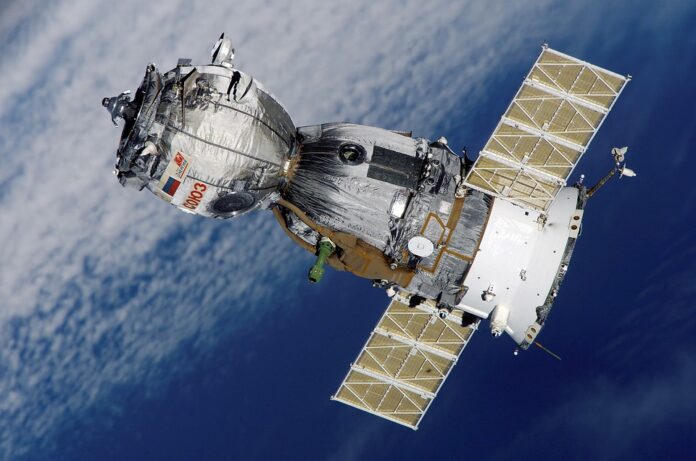
In an age where information travels at lightning speed and connectivity is more crucial than ever, satellite technology has emerged as a cornerstone of modern life. From enhancing telecommunications to advancing scientific research, satellites orbiting our planet play a significant role in shaping our future. In this article, we will explore the evolution of satellite technology, its current applications, and its potential impact on various sectors.
A Brief History of Satellite Technology
The journey of satellite technology began with the launch of Sputnik 1 by the Soviet Union in 1957, the first artificial satellite to orbit Earth. This groundbreaking event marked the start of the Space Age and kicked off a technological race that would see the development of various applications of satellite systems. In the ensuing decades, technological advancements led to the deployment of communication, weather, reconnaissance, and navigation satellites.
- 1960s-1980s: The U.S. launched its first reconnaissance satellites, while communication satellites like Telstar became crucial for transcontinental communications.
- 1990s: Global Positioning System (GPS) satellites appeared, transforming navigation and travel.
- 2000s-Present: Miniaturization and the rise of cubesats (miniature satellites) made it more affordable for private companies and educational institutions to access space, leading to an explosion of satellite launches and innovations.
Applications of Satellite Technology
1. Telecommunications
Satellites have revolutionized the telecommunications industry by providing global coverage and enabling high-speed internet, television broadcasting, and voice communication. This technology allows remote areas to connect to the global network, thus bridging the digital divide. Modern innovations, such as low Earth orbit (LEO) satellite constellations like SpaceX’s Starlink, aim to provide high-speed internet access to even the most isolated regions.
2. Earth Observation and Remote Sensing
Satellites equipped with advanced sensors capture images and data about Earth’s surface, atmosphere, and oceans. This information is invaluable for various fields including agriculture, forestry, and environmental monitoring. Key applications include:
- Agriculture: Satellite imagery helps farmers optimize crop yields by providing data on soil health, moisture levels, and pest infestations.
- Disaster Management: Satellites can monitor natural disasters, providing real-time data for better emergency response and recovery strategies.
- Climate Science: Continuous monitoring of Earth’s climate systems aids in understanding climate change and its impacts.
3. Navigation and Geolocation
GPS satellites form a network that allows for precise location tracking and navigation. This technology is crucial not only for individual use in smartphones but also for industries like logistics and transportation. By providing real-time data, GPS enhances route efficiency, reduces fuel consumption, and improves safety.
4. Scientific Research
Satellites facilitate groundbreaking scientific research by enabling long-term data collection and observations that are impossible to achieve from the ground. They contribute to studies in atmospheric sciences, astronomy, and even biological research. For example, the Hubble Space Telescope has provided invaluable data about the universe, significantly advancing our understanding of space.
5. Military and Defense
In the military realm, satellites improve reconnaissance capabilities, provide situational awareness, and enhance communication among units. They are essential for monitoring borders, tracking enemy movements, and coordinating operations in real-time. The dual-use nature of satellite technology means that advances in commercial satellite capabilities can also boost military applications.
The Future of Satellite Technology
As we look to the future, several trends and innovations are poised to further transform satellite technology and its applications:
Low Earth Orbit (LEO) Constellations
LEO satellite constellations are a game-changer. By deploying a large number of small satellites in low Earth orbit, companies can provide global internet coverage at low latency. SpaceX’s Starlink, Amazon’s Project Kuiper, and OneWeb are among the companies racing to deploy these constellations.
Miniaturization
The trend toward miniaturization in satellite technology is giving rise to smaller, more affordable satellites, allowing businesses and universities to participate in space exploration and research. This democratization of space access has far-reaching implications for innovation and scientific discovery.
Enhanced Imaging and Sensing Technologies
Advancements in sensor technology are enabling satellites to capture higher resolution images and gather more sophisticated data. Multispectral and hyperspectral imaging are opening new avenues for agriculture, forestry, and mineral exploration.
Autonomous Operations
Future satellites may operate autonomously, thanks to advances in artificial intelligence and machine learning. These technologies can improve decision-making processes, enabling satellites to conduct complex tasks without human intervention.
Sustainability
The growing concern for space debris calls for innovations in sustainable satellite technologies. Companies are exploring ways to deorbit aging satellites efficiently and to design smaller, less polluting spacecraft. Sustainable practices are becoming an integral part of the space industry’s future.
Conclusion
Satellite technology is at the forefront of many innovations poised to change our world. From providing critical data to supporting connectivity and opening new frontiers in research and exploration, satellites are shaping our lives in ways we are only beginning to grasp. As this technology continues to evolve, its potential to drive change across sectors is immense.
FAQs
1. What is a satellite?
A satellite is an artificial object placed in orbit around a celestial body, such as Earth, for various purposes including communication, navigation, and earth observation.
2. How do satellites communicate with Earth?
Satellites communicate with Earth through radio signals sent to and from ground stations, typically using microwave frequencies.
3. What are LEO satellites?
Low Earth Orbit (LEO) satellites orbit Earth at altitudes between 180 to 2,000 kilometers. They are characterized by lower latency in communication and are being deployed in large constellations for global internet coverage.
4. How are satellites powered?
Most satellites are powered by solar panels that convert sunlight into electricity. They may also have batteries for use during eclipse periods when they are not in direct sunlight.
5. What challenges does the satellite industry face?
Key challenges include space debris, maintaining satellite security, and ensuring sustainable practices in satellite launches and operations.
The trajectory of satellite technology is on a path of continuous growth and innovation, promising even greater advancements in the years to come. Whether through improved connectivity, enhanced scientific research, or sustainable practices, satellites will remain vital to our global infrastructure and future developments.

