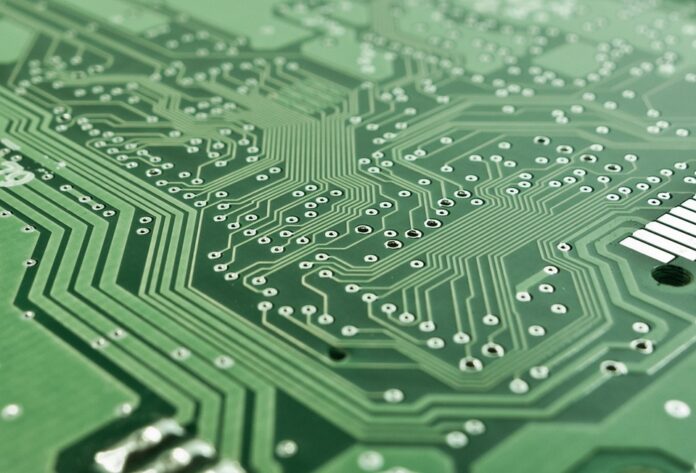
In the dynamic landscape of technology, chip technology stands at the forefront of innovation, fueling advancements across numerous sectors. From artificial intelligence (AI) and the Internet of Things (IoT) to cloud computing and autonomous vehicles, chips play a crucial role in the performance and capabilities of modern devices. As we venture further into the 21st century, several key trends and developments in chip technology are shaping the future of computing and, consequently, our daily lives.
The Evolution of Chip Technology
Historical Context
The journey of chip technology began in the mid-20th century with the invention of the transistor, which laid the groundwork for modern electronics. Over the decades, chips became smaller, more efficient, and increasingly powerful—a trend encapsulated by Moore’s Law. Coined by Intel co-founder Gordon Moore in 1965, this observation predicts that the number of transistors on a microchip will double approximately every two years, leading to exponential increases in computing power and efficiency.
Current Trends
In recent years, advancements such as system-on-chip (SoC) designs, heterogeneous computing, and the emergence of specialized chips like Graphics Processing Units (GPUs) and Application-Specific Integrated Circuits (ASICs) have continued to transform the landscape. These chips provide optimized performance for specific tasks, particularly in data-intensive applications like machine learning and big data processing.
The Role of Artificial Intelligence
AI Chipsets
As AI technology matures, the demand for specialized chipsets designed to handle the unique requirements of machine learning and neural networks has surged. NVIDIA’s GPU architecture, for example, has become synonymous with AI development due to its ability to process vast amounts of data simultaneously.
Increased Efficiency
The integration of AI into chip design not only enhances computational speed but also improves energy efficiency. Companies are working to develop chips that can perform complex computations with less power, significantly reducing the environmental impact of data centers and high-performance computing environments.
The Internet of Things (IoT)
Expanding Connectivity
The IoT revolution is another area heavily influenced by chip technology. As connected devices proliferate, the need for compact, energy-efficient chips is paramount. These chips enable smart home appliances, industrial sensors, and wearables to communicate and exchange data seamlessly.
Edge Computing
With the rapid growth of IoT comes the necessity for edge computing—processing data closer to where it is generated rather than relying solely on centralized cloud servers. Edge devices equipped with specialized chips can analyze information in real time, reducing latency and enhancing the overall user experience.
Quantum Computing: A Paradigm Shift
The Promise of Quantum
Quantum computing represents a significant leap in computing power, leveraging the principles of quantum mechanics to process information in ways that classical computers cannot. Quantum chips, still in experimental stages, have the potential to solve problems ranging from drug discovery to cryptography much faster than traditional systems.
Challenges to Overcome
However, the development of quantum chips also presents unique challenges, including error correction, qubit coherence, and scaling up the technology for practical applications. Despite these obstacles, organizations like Google, IBM, and D-Wave are actively pursuing quantum chip development, hoping to realize its transformative potential.
The Shift Towards Sustainability
Eco-Friendly Chip Design
As the technology sector grapples with its environmental impact, chip manufacturers are increasingly prioritizing sustainability. Innovations in materials science and manufacturing processes aim to reduce waste and energy consumption associated with chip production. Companies are exploring alternatives to traditional silicon chips, including organic and biodegradable materials.
Energy-Efficient Computing
Energy-efficient chips are critical in addressing the growing demand for power in data centers, where the computational load continues to escalate. New architecture designs and fabrication techniques are emerging to boost performance while lowering energy consumption, contributing to global sustainability efforts.
The Future of 5G Network Infrastructure
Enabling Hyperconnectivity
The rollout of 5G networks is poised to revolutionize everything from mobile communications to autonomous vehicles. Advanced chips will be crucial for enabling the high-speed, low-latency communication that 5G technology promises. Chip development in this space focuses on supporting massive data throughput and connectivity.
Implications for Remote Work and Smart Cities
With 5G, new applications in remote work and the development of smart cities will flourish. Enhanced connectivity will allow for more robust IoT ecosystems, facilitating everything from traffic management to remote healthcare solutions—all powered by advanced chip technology.
Conclusion
As chip technology continues to advance, the future of computing looks incredibly promising. The interplay between specialized chips, AI, IoT, and quantum computing is creating a tech ecosystem that will redefine how we work, communicate, and live. With persistent innovation and a focus on sustainability, chip manufacturers will play an essential role as enablers of the next wave of technological advancement.
FAQs
1. What is Moore’s Law?
Moore’s Law is the observation that the number of transistors on a microchip doubles approximately every two years, leading to increases in computing power and efficiency.
2. What are AI chipsets?
AI chipsets are specialized processors designed to perform complex calculations needed for artificial intelligence applications, such as machine learning and neural networks. Examples include GPUs and TPUs (Tensor Processing Units).
3. How does IoT relate to chip technology?
IoT devices require compact, energy-efficient chips for connectivity and data processing. These chips help enable smart devices to communicate and function effectively within an ecosystem.
4. What is quantum computing?
Quantum computing is a cutting-edge area of technology that uses principles of quantum mechanics to process information. Quantum chips are still in early development but promise to outperform classical computers in solving specific problems.
5. How are chip manufacturers addressing sustainability?
Chip manufacturers are focusing on eco-friendly design and production processes, exploring alternative materials, and developing energy-efficient chips to minimize the environmental footprint of chip technology.

