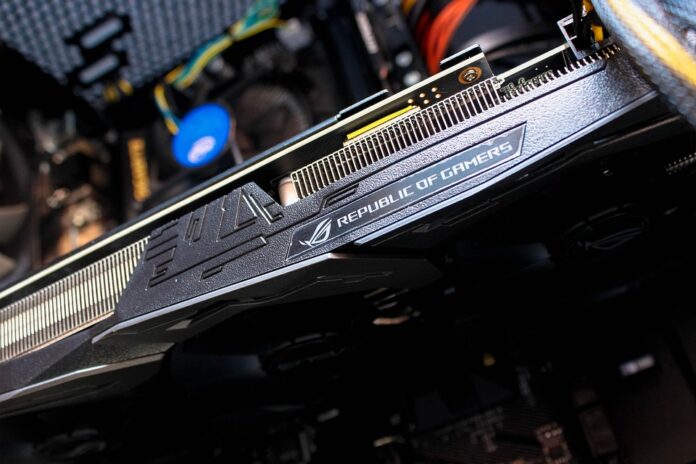
In the realm of technology, few innovations have been as transformative as the Graphics Processing Unit (GPU). Originally designed to accelerate 3D graphics rendering, GPUs have evolved into powerful parallel processors that are redefining industries far beyond gaming. This article explores the GPU revolution, examining its influence on gaming and various other domains such as artificial intelligence, data science, and virtual reality.
The Origins of GPUs
The history of GPUs dates back to the late 1980s and early 1990s when graphics adapters began to emerge. The introduction of 3D graphics accelerators allowed developers to create visually rich experiences in real-time. The Voodoo Graphics card, released by 3Dfx in 1996, marked a pivotal moment, enabling enhanced performance that led to the popularization of 3D gaming. As technology advanced, companies like NVIDIA and ATI (now AMD) began producing dedicated graphics cards that integrated more functionalities, paving the way for modern GPUs.
Transforming Gaming
Enhanced Graphics and Performance
In gaming, GPUs are responsible for rendering everything from complex 3D environments to realistic physics. The introduction of technologies such as ray tracing and deep learning super sampling (DLSS) has vastly improved visual fidelity. Ray tracing simulates the way light interacts with objects in a realistic manner, creating lifelike shadows and reflections. DLSS leverages AI to upscale lower-resolution images, allowing games to run smoother without sacrificing quality.
The result? Games like “Cyberpunk 2077,” “Control,” and “The Last of Us Part II” deliver experiences that were once thought impossible, with stunning visuals and immersive gameplay.
Seamless Multi-Tasking
In addition to enhancing graphics, GPUs allow for smoother gameplay by managing multiple tasks simultaneously. This parallel processing capability is invaluable not only for gaming but also for video editing, streaming, and broadcasting. Gamers can effortlessly maintain high frame rates while streaming their gameplay, conducting video calls, or editing content in real-time—a stark improvement from the days when dedicated systems were required to manage each task separately.
The Rise of GPUs Beyond Gaming
Artificial Intelligence and Machine Learning
One of the most significant advancements in GPU technology is its application in artificial intelligence (AI) and machine learning. The parallel processing capabilities of GPUs allow them to handle the massive datasets necessary for training AI models. Tasks that would take conventional CPUs days to complete can now be processed in hours or even minutes with the right GPU architecture.
Deep learning frameworks like TensorFlow and PyTorch have integrated GPU support, making it easier for developers to utilize this computing power. Applications range from natural language processing to image recognition and autonomous driving.
Data Science and Big Data Analytics
As industries collect vast amounts of data, the need for powerful computational tools has never been greater. GPUs are now commonly employed in data science, enabling analysts to perform complex calculations, simulations, and visualizations quickly. The ability to process large datasets in real-time can provide businesses with actionable insights, leading to more informed decision-making.
Virtual Reality and Augmented Reality
Virtual reality (VR) and augmented reality (AR) are on the rise, expanding the horizons of gaming and other sectors. GPUs play a crucial role in delivering the immersive experiences that VR and AR applications require. With the need for high frame rates and low latency, GPUs help create environments where users can engage seamlessly in virtual spaces.
The quality of VR experiences, such as those in “Half-Life: Alyx” or training simulations for the medical field, relies heavily on GPU technology to render the virtual environment convincingly, ensuring immersion without lag.
Cryptocurrency and Blockchain
The GPU revolution has also made waves in the world of cryptocurrency mining. Cryptocurrencies like Bitcoin and Ethereum require immense computational power to validate transactions and secure networks. While initially dominated by CPUs, the mining process has shifted towards GPUs due to their efficiency in solving complex mathematical problems.
However, this surge in demand for GPUs has had a mixed impact; while it has bolstered the market, it has also led to shortages that have frustrated gamers and developers alike.
The Future of GPUs
Emerging Technologies
As we look to the future, several emerging technologies are set to leverage the power of GPUs even further. Quantum computing, neuromorphic computing, and advanced AI will likely redefine how we think about processing power.
Energy Efficiency and Sustainability
The growing concern over energy consumption has prompted GPU manufacturers to focus on energy-efficient designs. Future GPUs will need to balance performance with sustainability, employing eco-friendly materials and manufacturing processes.
Conclusion
The GPU revolution has undeniably transformed not only the gaming landscape but also a multitude of industries. As technology continues to advance, GPUs will remain at the forefront of innovation, enabling experiences and applications that were once beyond imagination. With their ability to handle complex calculations in real-time, they are set to drive the future of technology in gaming, artificial intelligence, data analytics, and much more.
FAQs
1. What is a GPU?
A Graphics Processing Unit (GPU) is a specialized electronic circuit designed to accelerate the processing of images and video. GPUs can perform parallel processing, which makes them ideal for handling tasks that require large amounts of data simultaneously.
2. How do GPUs enhance gaming performance?
GPUs improve gaming performance by rendering graphics faster than traditional CPUs, allowing for higher frame rates and improved visual quality. Technologies like ray tracing and DLSS further enhance the graphics experience.
3. Can GPUs be used for tasks other than gaming?
Yes, GPUs are increasingly used in various fields such as artificial intelligence, machine learning, data science, virtual reality, and cryptocurrency mining due to their powerful parallel processing capabilities.
4. What is the difference between a GPU and a CPU?
A Central Processing Unit (CPU) is designed for general-purpose processing and excels in tasks that require sequential processing, while a GPU is specialized for parallel processing and is optimized for tasks involving large data sets, like 3D rendering and scientific computations.
5. How do I choose the right GPU for gaming?
When selecting a GPU for gaming, consider factors such as performance, memory capacity, compatibility with your existing hardware, and your budget. Research benchmarks and reviews to understand how each GPU performs in the games you intend to play.

